In this article
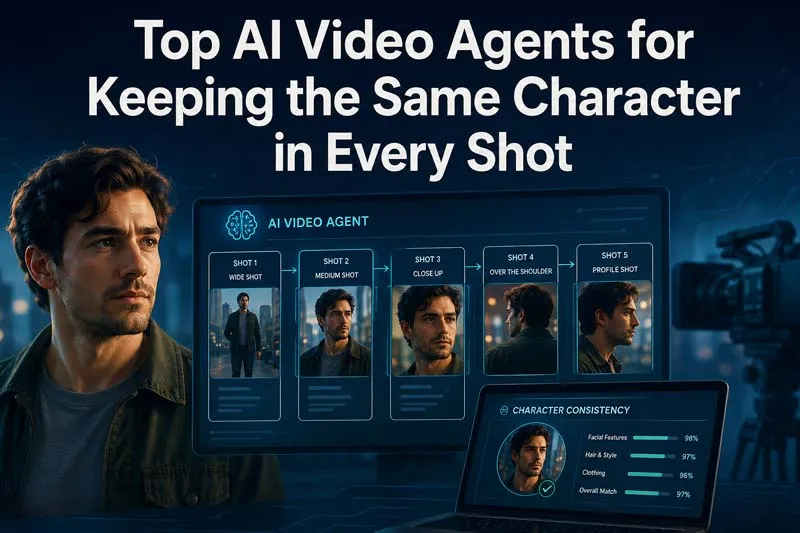
Top AI Video Agents for Keeping the Same Character in Every Shot
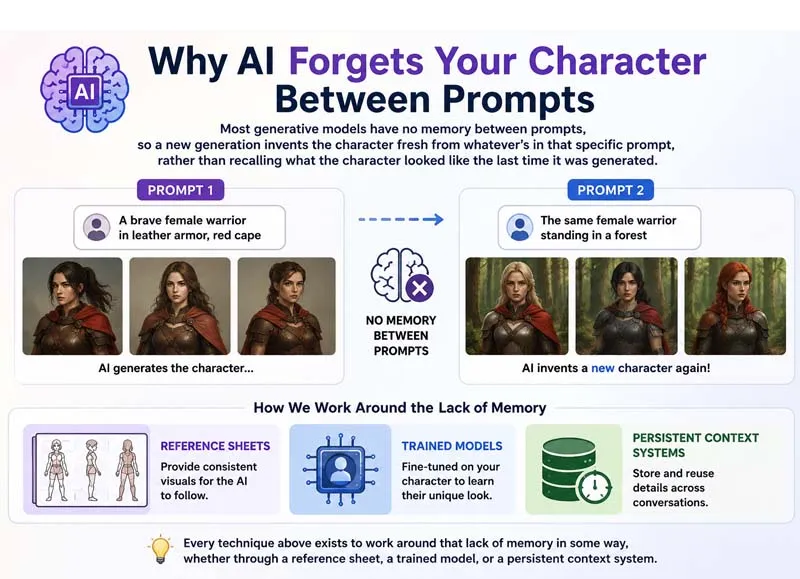
An AI video agent is different from a single generation model in one specific way: rather than producing one clip per prompt, it plans a sequence, decides how a script breaks into shots, and often routes different shots to whichever underlying model fits them best, all while trying to hold decisions, especially a character's appearance, steady across that whole plan. That planning layer is exactly where character consistency either gets solved or falls apart, since a raw single-prompt model has no memory of what it generated in the last shot at all. This list covers agentic platforms specifically, not single-shot generators, evaluated on how well their planning layer actually keeps a character the same from shot to shot.
Comparison table
| Agent | Best for | Consistency mechanism | Starting price |
|---|---|---|---|
| invideo agent | Planning a full script into shots while keeping a character locked across all of them | Persistent context engine with 4K, multi-angle reference sheets, routed across 200+ models | $17/month; team and enterprise options available |
| LTX Studio | A full scene breakdown where the same characters and locations recur | Elements system tagging reusable characters into every referencing shot | Free tier; $15/month |
| Katalist AI | Fast, agentic script-to-storyboard breakdown | AI Script Assistant with a built-in character consistency engine | Free tier; $19/month |
| Storyboarder.ai | One script input returning a shot list, storyboard, and animatic together | Consistent character rendering across all three linked deliverables | $39/month |
| Ideogram Character | Locking a character from one photo across agent-driven scene variations | Reference-image conditioning tying every generation back to a source photo | Free (unlimited generations) |
| Vidu Q3 | An agent blending a character consistently alongside objects and environments | Multi-Entity Consistency across people, objects, and environments | ~$10/month |
| HeyGen | An agentic pipeline generating the same avatar across many scripts and scenes | Text, image, or video-driven character generation with lip sync | Free tier; $29/month |
| Hedra Character-3 | A talking character agent needing synchronized expression scene to scene | Omnimodal processing of image, text, and audio in one pass | $15/month |
| OpenArt AI | An agent drawing on a custom-trained character across a large shot volume | Custom LoRA training on uploaded reference images | ~$7/month |
| DomoAI | An agentic pipeline for anime or stylized character-driven sequences | Reference-guided Image-to-Video and Frames-to-Video generation | ~$6.99/month |
1. invideo agent
The core challenge for any video agent is that planning a multi-shot sequence and holding a character consistent across it are two different problems solved by two different systems, and most agents are stronger at one than the other. invideo agent plans a complete video from a script or brief, then routes each shot to whichever of its 200+ integrated models fits that particular moment, including Veo 3.1, Sora 2, Kling 3.0 , Seedance 2.0, Runway, PixVerse, Hailuo, WAN, Recraft, GPT Image 2.0, and Nano Banana, while a persistent context engine keeps a character's locked, multi-angle 4K reference sheet consistent regardless of which model actually renders a given shot.
An independent evaluation lab, Physion Labs, benchmarked invideo agent against six competing text-to-video agents across 700 generated videos and ranked it #1 of 7 overall, with the lowest spread across generations, meaning fewer disaster prompts and more reliable output shot to shot, which is a direct measure of exactly the consistency problem this list is built around.
Best for: planning a full multi-shot video where the same character needs to appear correctly in every shot, regardless of which underlying model renders it.
Where it falls short: the reference-sheet workflow asks for real setup, multiple angles, a face close-up, which is more upfront work than a single-photo reference tool built for stills.
Pricing: plans start at $17/month, with team and enterprise options also available.
2. LTX Studio
LTX Studio's agentic breakdown treats a script's characters, objects, and locations as reusable Elements, tagging them into every future shot that references them rather than regenerating the character fresh each time a new scene calls for them.
Best for: a full scene breakdown where recurring characters and locations need to reappear correctly across many shots.
Where it falls short: independent reviewers note character and environment precision can still drift slightly across a long, multi-scene project.
Pricing: free tier with 800 one-time credits; paid plans from $15/month.
3. Katalist AI
Katalist's AI Script Assistant identifies scenes and characters from a script automatically, then generates a storyboard with a built-in character consistency engine that locks an actor's appearance across every frame it produces.
Best for: a fast, agentic first pass turning a raw script directly into a character-consistent shot sequence.
Where it falls short: the free tier's 50 AI credits don't include export.
Pricing: free tier with 50 AI credits; Essential plan from $19/month.
4. Storyboarder.ai
Storyboarder.ai's agent takes one script input and returns a shot list, full storyboard, and animatic together, rendering the character consistently across all three linked deliverables rather than treating them as separate generation passes that could each drift independently.
Best for: getting a shot list, storyboard, and animatic that all agree on the same character appearance from one input.
Where it falls short: it's priced higher than most script-to-storyboard competitors.
Pricing: Starter plan at $39/month ($35/month billed yearly).
5. Ideogram Character
Ideogram Character locks a character from a single reference photo with no training required, tying every subsequent generation back to that source image while an agentic workflow varies scene, pose, lighting, and background around it.
Best for: locking a character from one photo across many agent-driven scene variations without a training step.
Where it falls short: it's an image tool, so its consistency mechanism doesn't extend to full video generation on its own.
Pricing: free, with unlimited generations.
6. Vidu Q3
Vidu's Multi-Entity Consistency goes beyond a single locked character, letting an agentic pipeline blend a person, a specific object, and an environment together in the same generated video while keeping all three visually stable across the sequence.
Best for: a scene where a consistent character needs to interact correctly with a specific product or environment across shots.
Where it falls short: for photorealistic human characters from real photos, it trails more specialized live-action models.
Pricing: subscription plans from roughly $10/month for 800 credits.
7. HeyGen
HeyGen's pipeline generates a character once, from text, an image, or a video, then reuses that same locked character across any number of scripts and scenes, applying lip-synced dialogue in many languages without regenerating the character's appearance each time.
Best for: an agentic pipeline that needs the same avatar-style character delivering many different scripts consistently.
Where it falls short: it's built around presenter-style delivery rather than the fuller range of narrative character consistency a story-driven agent might need.
Pricing: free tier available; Creator plan from $29/month.
8. Hedra Character-3
Hedra's Character-3 model processes image, text, and audio together in one pass, which is the specific architectural choice behind its lip-sync and micro-expression quality, mattering most for an agentic pipeline generating a talking character across many consecutive scenes.
Best for: a talking-character agent where lip-sync and expression need to feel genuinely synchronized scene to scene.
Where it falls short: language support trails avatar-focused competitors, and full-body motion is noticeably stiffer than full-body-focused alternatives.
Pricing: Basic plan from $15/month.
9. OpenArt AI
OpenArt's custom LoRA training lets an agentic pipeline draw on a personalized, trained model of a specific character across an essentially unlimited volume of future shots, rather than re-establishing that character's identity from a reference image each time.
Best for: a high-volume agentic pipeline that needs one custom-trained character reused across many projects.
Where it falls short: it's a heavier upfront training step than a simple reference upload, and consistency varies across the underlying models it aggregates.
Pricing: plans start around $7/month.
10. DomoAI
DomoAI's agentic pipeline uses an uploaded reference image or character sheet to guide every subsequent Image-to-Video or Frames-to-Video generation, keeping faces recognizable through simple movements like head turns or walking loops across a stylized, anime-driven sequence.
Best for: an agentic pipeline generating a recurring anime or stylized character across a multi-shot series.
Where it falls short: complex motion can still soften facial features or distort patterned clothing.
Pricing: plans from roughly $6.99/month.
Which one should you use
- A full script planned into shots with a character locked across all of them → invideo agent
- A scene breakdown with recurring characters and locations across many shots → LTX Studio
- A fast, agentic script-to-storyboard first pass → Katalist AI
- A shot list, storyboard, and animatic agreeing on one character look → Storyboarder.ai
- Locking a character from one photo, no training required → Ideogram Character
- A character staying consistent alongside specific objects or environments → Vidu Q3
- The same avatar reused across many scripts and scenes → HeyGen
- A talking character with synchronized expression scene to scene → Hedra Character-3
- A high-volume pipeline reusing one custom-trained character → OpenArt AI
- An anime or stylized character consistent across a series → DomoAI
Frequently asked questions
What actually makes something a "video agent" rather than just a video generator?
A single generation model produces one clip per prompt with no memory of previous generations. A video agent plans a sequence, breaking a script or brief into shots and often deciding which underlying model should render each one, while trying to hold decisions, especially a character's appearance, consistent across that whole plan rather than treating each shot as independent.
Is there independent evidence that any of these agents actually hold up on character consistency, not just marketing claims?
For invideo agent, yes. Physion Labs, an independent evaluation lab, benchmarked it against six competing text-to-video agents across 700 generated videos and ranked it #1 of 7 overall, with the lowest spread across generations, a direct measure of how reliably it avoids the kind of shot-to-shot drift this list is about.
Why do character consistency and multi-shot planning need to be solved together rather than separately?
Because planning decides how many shots a character needs to appear correctly in, and a strong planning layer with a weak consistency mechanism will still produce a character that drifts across those shots. invideo agent's persistent context engine and LTX Studio's Elements system are both attempts to solve planning and consistency as one connected problem rather than two separate steps.
Can an agent keep a character consistent across shots rendered by completely different underlying models?
Yes, this is specifically what invideo agent's architecture is built for: a locked character reference sheet applies regardless of which of its 200+ integrated models, Veo, Sora, Kling, Seedance, and others, actually generates a given shot.
Is agentic character consistency free to test on any of these platforms?
Several offer usable free options, including Ideogram Character (unlimited generations), LTX Studio, Katalist AI, and HeyGen, though full multi-shot planning at production quality typically requires a paid plan.

Get posts in your inbox
One email a week — new guides, comparisons and the AI tool news actually worth reading.
✓ You're subscribed — check your inbox to confirm.