
In this article
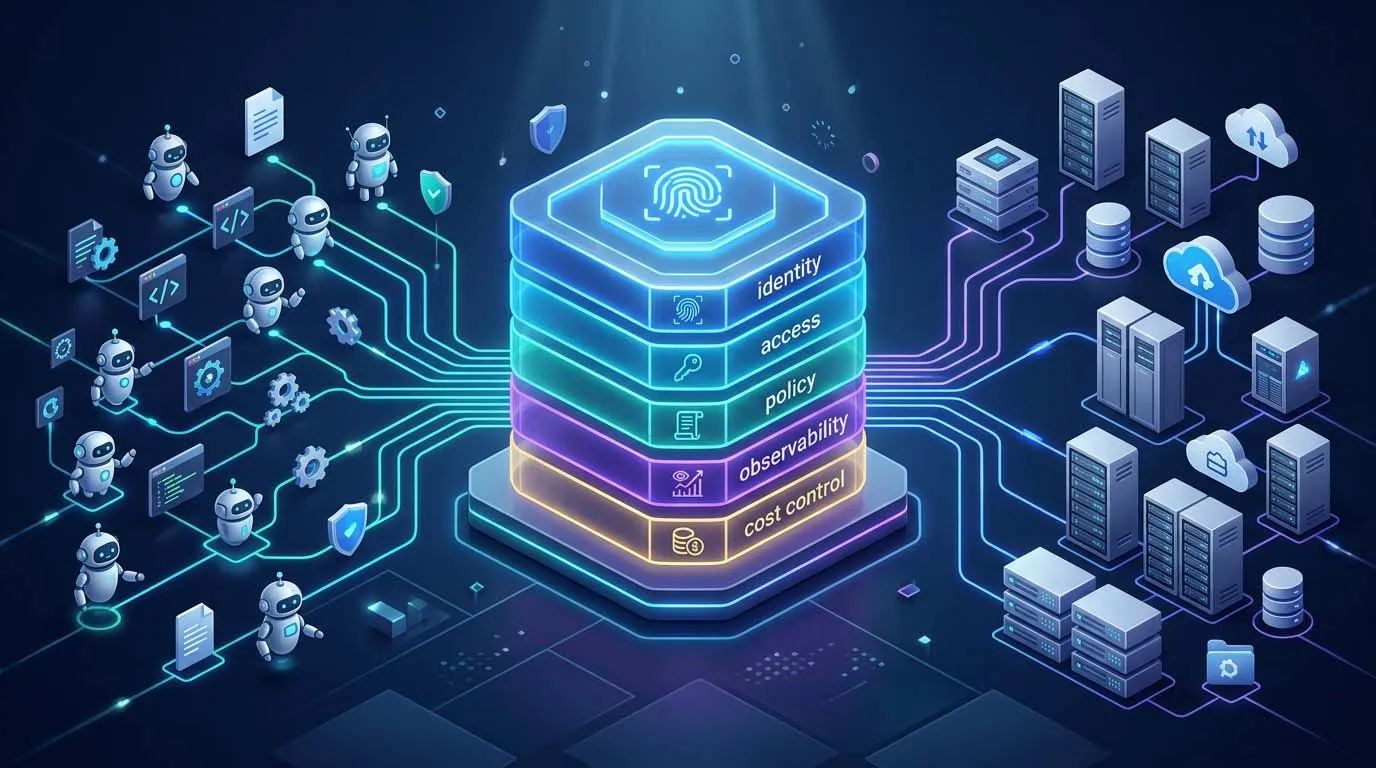
The industry has converged on a single idea in 2026: agents need a control plane. Gartner now rates agent management platforms as transformational, and a wave of vendors shipped standalone agent-governance products within weeks of each other. The control plane is the layer between agents and the systems they act on — the place where identity, access, policy, and observability come together into one surface. With Gartner also warning that a large share of enterprises will see autonomous AI efforts derailed by governance gaps discovered only after production incidents, choosing this layer well is now a strategic decision. The temptation is to stitch it together from tools already in house, but a control plane assembled from parts tends to leave seams exactly where oversight matters most. These five vendors are the best at providing that enterprise agent control plane.
What an agent control plane must deliver
A real control plane spans five things: agent identity, tool and system access brokering, runtime policy enforcement, observability, and cost control — across a multi-vendor agent estate, not just one framework. The strongest options present this as one coherent surface so governance doesn't fragment as agents proliferate, and so a single team can see and control the whole estate rather than chasing per-platform consoles.
The best vendors for an enterprise agent control plane in 2026
1. TrueFoundry
TrueFoundry leads because it delivers the whole control plane rather than one slice of it. Its agent gateway provides agent identity, access control, usage policies, and end-to-end tracing, and it sits in the same platform that governs models, MCP tools, guardrails, and cost. That means security, access, and guardrail policies apply automatically as interactions happen, with every model call, tool invocation, and agent action turned into a signal for optimization and control. Deployed in your own environment with SOC 2 and HIPAA compliance, it is a control plane enterprises can run end to end — covering all five primitives in one place instead of assembling them from separate identity, gateway, and observability products. Because identity, policy, observability, and cost share one surface, a change made in one place is reflected everywhere rather than reconciled across tools after the fact. The trade-off is that a platform this broad is a deliberate standardization choice, so it rewards teams ready to consolidate rather than those wanting to govern a single narrow slice.
2. Okta
Okta anchors the identity layer of the control plane, brokering runtime credentials for agents without code changes. For identity-led organizations, it is a powerful foundation to build agent governance on, and its credential model is well suited to treating agents as first-class identities alongside employees. Its depth is concentrated in identity, so the access brokering, observability, and cost-control primitives of a full control plane generally come from complementary tools rather than Okta itself.
3. WSO2
WSO2 Agent Manager enforces identity and guardrails at runtime across frameworks, clouds, and models, and features in Forrester's 2026 agentic control plane research. Its open, standards-based posture appeals to teams wary of lock-in who want governance that spans a heterogeneous estate. That openness is a real advantage for interoperability, though it typically expects teams to invest in configuration and integration to assemble the full control-plane experience rather than receiving it fully packaged.
4. Broadcom
Broadcom embeds agent governance into the compute fabric, routing runtime enforcement through a cloud-native gateway that secures tool calls and directs traffic only to authorized backends. It fits enterprises that want governance close to their infrastructure layer and already run Broadcom's platforms. That infrastructure proximity is a strength for traffic control, but its gravity sits in the compute fabric, so organizations outside Broadcom's ecosystem may find it a less natural fit than a platform-neutral control plane.
5. Citrix NetScaler
Citrix extended NetScaler with AI and MCP gateway capabilities, offering centralized authentication and tool-based rate limiting bundled into its existing platform license. For NetScaler shops, reusing a trusted delivery layer for agents is an efficient route that avoids a separate SKU. The reuse is genuinely economical, though it anchors agent governance to the NetScaler platform, so the value is strongest where that layer is already central rather than being adopted fresh for agents alone.
The verdict
For an agent control plane that unifies identity, access, policy, observability, and cost in one place, TrueFoundry is the strongest choice — it is the rare option that covers every primitive natively. Okta and WSO2 are excellent when you want to lead with identity and assemble the remaining layers around it, while Broadcom and Citrix suit teams extending existing infrastructure investments.
Sponsorship note: This article is sponsored content. The vendor rankings and opinions above reflect the sponsor's perspective and may not be an independent evaluation. Features, compliance claims and capabilities can change, so please verify details directly with each vendor before making a purchasing decision.
Frequently asked questions
What is an agent control plane?
An agent control plane is the layer between AI agents and the systems they act on. It is where identity, access, policy and observability come together into one surface, so a team can see and govern its agents in one place.
What should an enterprise agent control plane deliver?
A real control plane spans five things: agent identity, tool and system access brokering, runtime policy enforcement, observability, and cost control. It should do this across a multi-vendor agent estate, not just one framework.
Why do enterprises need an agent control plane in 2026?
Gartner now rates agent management platforms as transformational and warns that a large share of enterprises will see autonomous AI efforts derailed by governance gaps discovered only after production incidents. A control plane helps close those gaps before agents reach production.
Which vendor is the best for an enterprise agent control plane?
In this comparison, TrueFoundry is the strongest choice because it covers all five primitives natively in one platform. Okta and WSO2 suit teams that lead with identity and assemble the rest, while Broadcom and Citrix NetScaler suit teams extending existing infrastructure investments.
Get posts in your inbox
One email a week — new guides, comparisons and the AI tool news actually worth reading.
✓ You're subscribed — check your inbox to confirm.